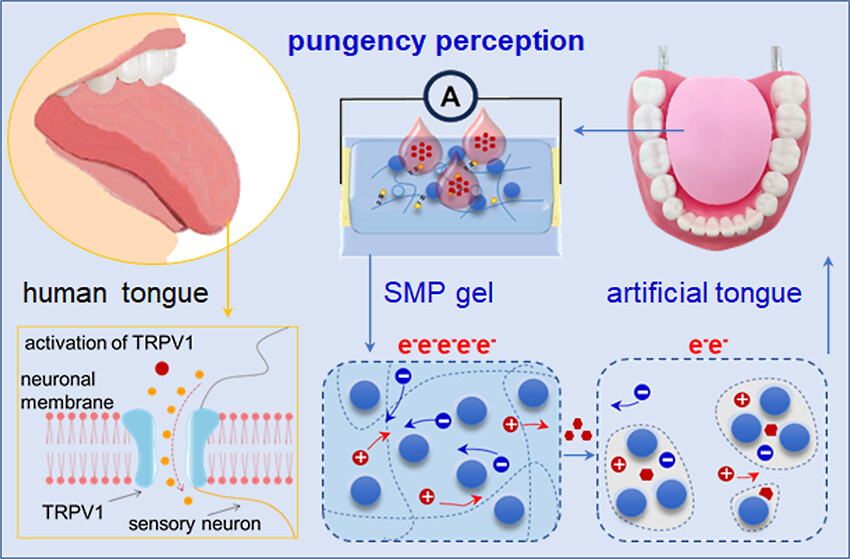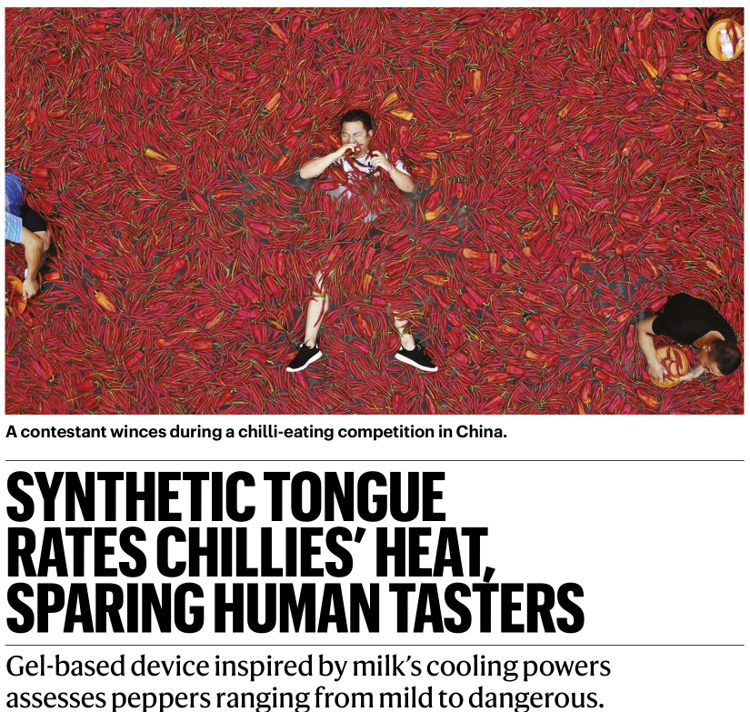
A novel gel-based artificial tongue developed by researchers from Shanghai Institute of Technology and East China University of Science and Technology offers a reliable, human-free method for measuring the spiciness of peppers and spicy foods. Inspired by the common knowledge that milk can alleviate the burning sensation caused by capsaicin, the team designed a sensor that mimics this natural interaction.
The device consists of a gel made from milk powder, acrylic acid, and choline chloride, sandwiched between two copper plates. When capsaicin binds to milk proteins in the gel, it forms large complexes that impede ion flow, reducing electrical conductivity. This change is measured and correlated with spiciness levels.
The team calibrated the system using eight types of peppers, creating a standardized spiciness scale from 0 (no heat) to 70 (extremely hot). Tests on common spicy products such as chili powder and Tabasco sauce showed strong agreement with evaluations from trained human tasters.
Published in ACS Sensors and highlighted in Nature, this research provides a promising tool for food quality control and standardization. The team aims to develop a portable, miniaturized version for wider industry use, potentially eliminating the need for repeated human tasting in food production.
Reference:
ACS Sensors, DOI: 10.1021/acssensors.5c01329
Nature News: Synthetic tongue rates chillies’ heat